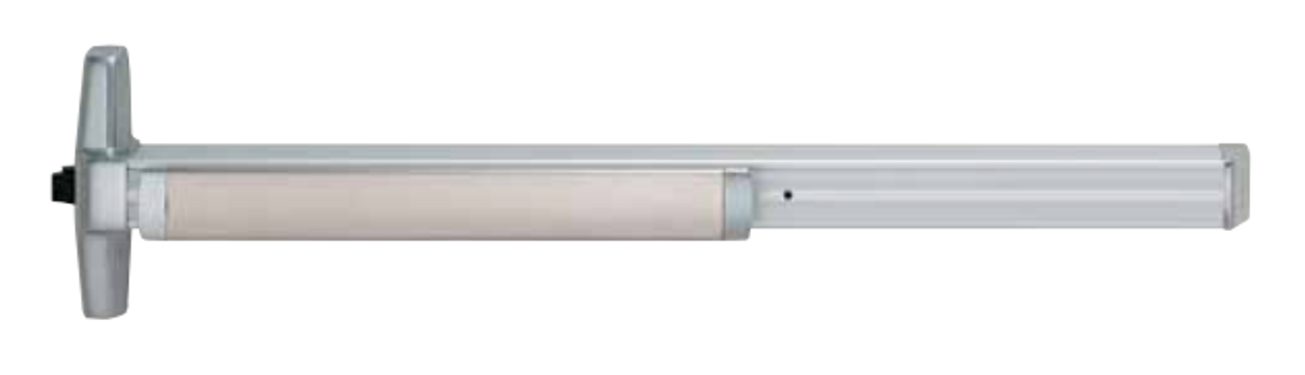
Exit devices, also called panic bars or crash bars, let people exit a building instantly by pushing a bar, even when the door is locked from outside. Building and fire codes require them on most commercial doors that serve as a means of egress, including schools, offices, restaurants, and assembly spaces.
The two distinctions that matter most: grade and fire rating. ANSI/BHMA Grade 1 devices are built for high-traffic and abuse-prone openings. They are what schools, hospitals, and institutional buildings should specify. A fire-rated exit device (UL listed) is mandatory on fire doors: unlike a standard panic device, it has no mechanical dogging, so the latch always re-engages and keeps the fire door positively latched. A panic-rated (non-fire) device is for doors that need code-compliant egress but are not part of a fire barrier.
Then choose the type for your door. A rim device surface-mounts on single doors and is the simplest and most robust choice. Surface or concealed vertical rod devices secure pairs of doors at top and bottom. Mortise exit devices combine the device with a mortise lock body for the most durable single-door solution. Add outside trim (lever, pull, or key-only) depending on how people enter from outside, and electric latch retraction or alarm kits if the opening is part of an access control system.
We stock Grade 1 panic and fire-rated exit devices from Marks USA, Von Duprin, Sargent, Detex, and more, with matching trim and accessories. Tell us your door type, width, and whether the opening is fire-rated, and we'll confirm the right device before you order.